LOCATION: Gordevio, Vallemaggia, Ticino
TYPOLOGY: Traditional Building Renovation
AREA: 70 sqm
YEAR: 2020
The project is set in Gordevio, in the Maggia Valley, within the “Grotti” zone of the Zoning Plan—an area of significant historical and landscape value, characterized by traditional stone buildings originally intended for the storage of wine and food provisions.
The project focuses on the renovation of a disused grotto, aiming to enhance its architectural and environmental qualities while fully respecting the context and planning constraints. The client wished to preserve a wine cellar dedicated to wine storage and tastings, offering guests an authentic space deeply rooted in local tradition. The upper floors have been adapted for use as a holiday home, featuring compact and functional spaces that maintain continuity with the building’s rustic character.
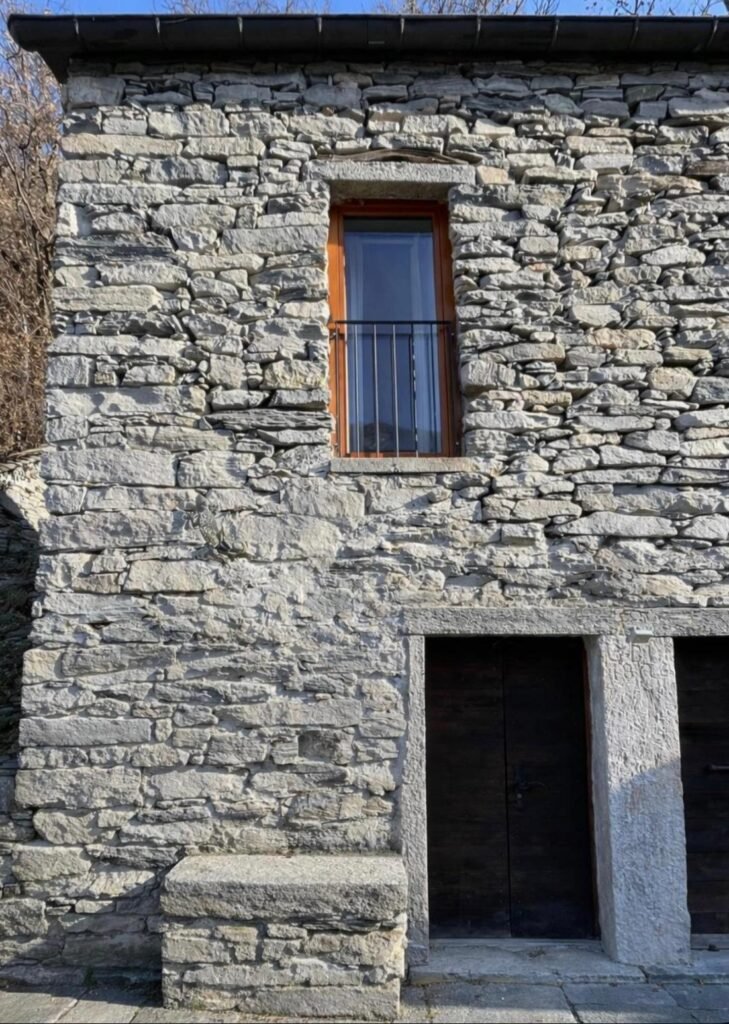
The intervention was conceived as a targeted and respectful operation, focused primarily on the interior spaces, while the external appearance of the grotto was left unchanged, in compliance with the Zoning Plan and with the original character of the building.
On the ground floor, one of the two cellar rooms has been reinterpreted as a service space, housing a kitchen and a boiler, with electrical and plumbing connections integrated without impacting the existing structure. The second room continues to serve as a storage space.
On the upper floor, a fully equipped bathroom with WC and shower was inserted in a room adjacent to the living area.
A new internal staircase leads to a mezzanine, where the sleeping area is located. The space is organized functionally, with the bed positioned to ensure comfort and adequate circulation, avoiding unnecessary elements and maintaining the building’s rustic and minimalist character.
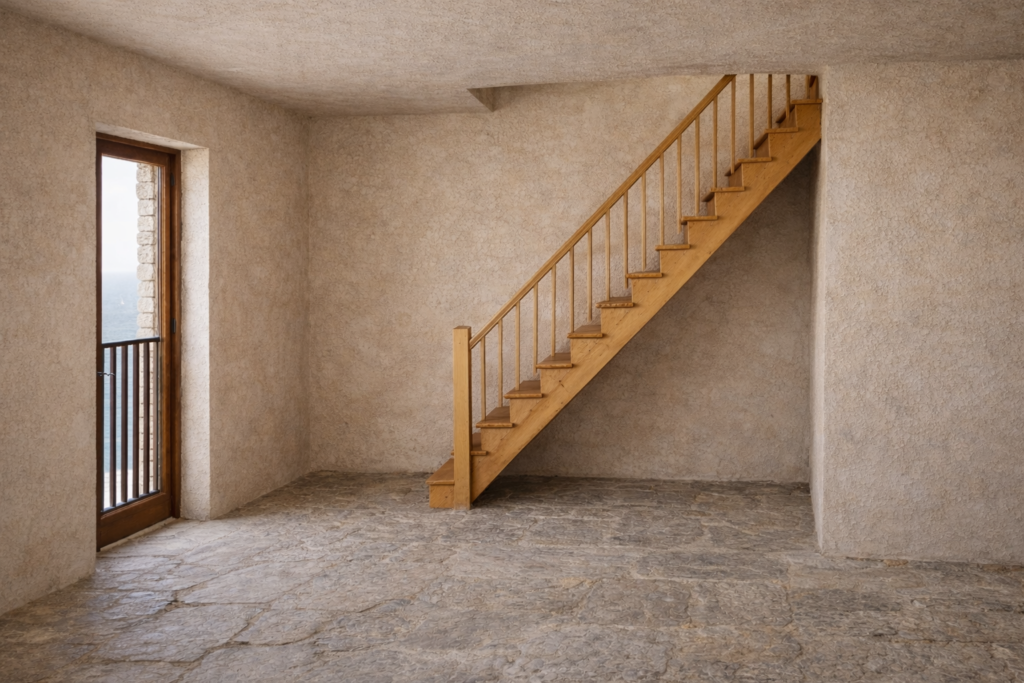
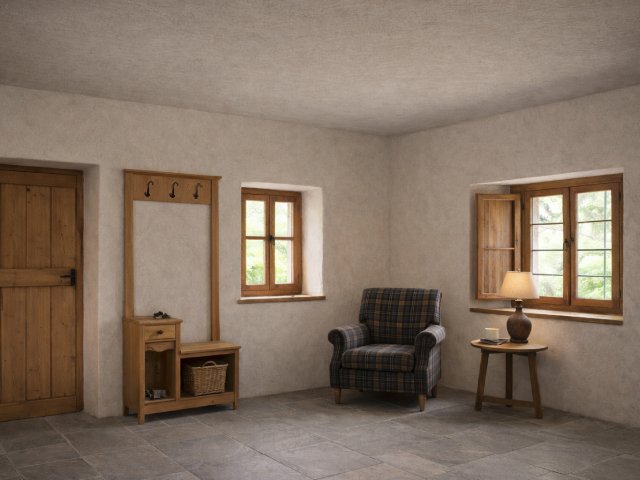
The interior spaces retain their authentic character: the walls are finished with beige rustic plaster, while the original rough stone slab flooring has been restored and reconditioned, recalling the local building tradition. Heating is provided by a wood-burning stove, consistent with the rustic atmosphere and the seasonal use of the house.
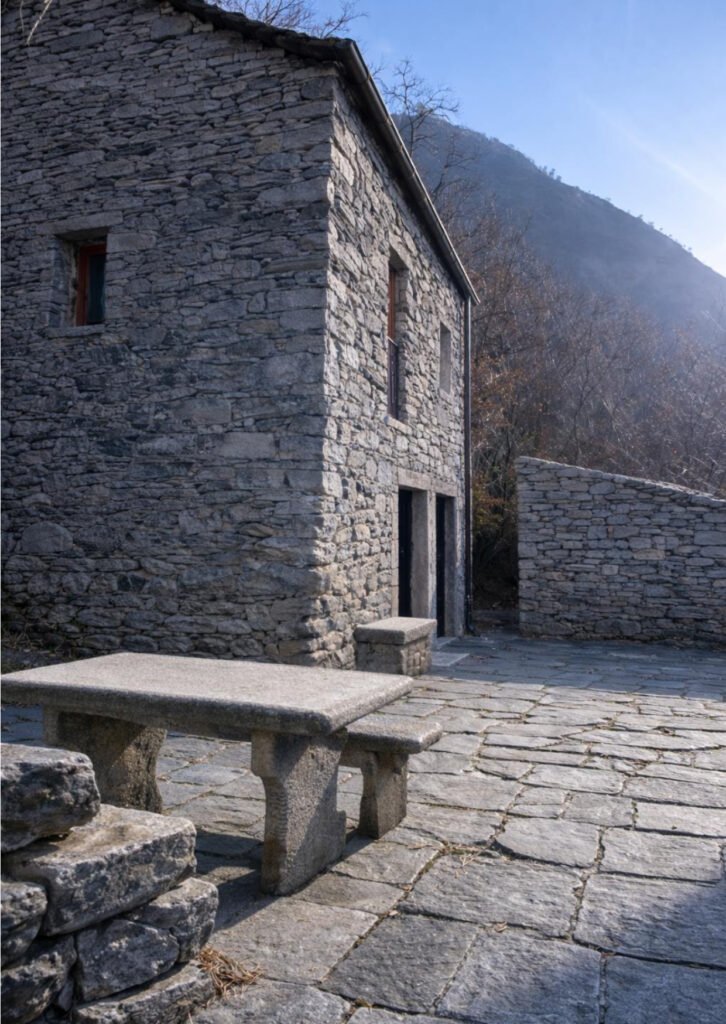
External interventions are deliberately minimal and aimed at restoring existing elements, including the reconstruction of the partially collapsed stone wall, the refurbishment of the external stone staircase, and the reorganization of the ground with the installation of stone slabs in the area in front of the entrance, along the west and north façades.